Email is the least glamorous channel in marketing and, dollar for dollar, still the most profitable — returning an average of $36 for every $1 spent. Social platforms decide who sees your posts; your email list is the one audience you actually own. For entrepreneurs building a brand online, that ownership is the whole point.
This guide walks through the full system: growing a list worth emailing, getting your messages opened, and automating the sequences that turn subscribers into customers. It pairs naturally with the SEO fundamentals that bring new subscribers to your list organically.
Building Your Email List
Your email list is your most valuable digital asset. Unlike social media followers, where algorithms control your reach, your email list gives you direct access to your audience. Building a quality list should be your top priority.
Create Compelling Lead Magnets
A lead magnet is a free resource you offer in exchange for someone’s email address. The key to an effective lead magnet is ensuring it provides immediate, tangible value to your target audience.
Some high-converting lead magnet ideas include:
- Comprehensive guides or ebooks that solve a specific problem
- Checklists and cheat sheets that simplify complex processes
- Free templates or worksheets that save time and effort
- Video tutorials or mini-courses that teach valuable skills
- Exclusive industry reports or research with original data
- Discount codes or free shipping for ecommerce businesses
- Free trials or demos for software or service-based businesses
The most successful lead magnets share three characteristics: they’re highly relevant to your audience, they deliver immediate value, and they demonstrate your expertise.
Optimize Your Opt-in Forms
Where and how you ask for email addresses significantly impacts your conversion rates. Here are best practices for opt-in forms:
- Keep forms simple — ask only for essential information (name and email is usually enough)
- Use compelling copy — focus on the benefit of subscribing, not just “Sign up for our newsletter”
- Strategic placement — include forms in your header, footer, sidebar, after blog posts, and as exit-intent popups
- Clear call-to-action buttons — use action-oriented text like “Send Me the Guide” instead of generic “Submit”
- Minimize friction — ensure forms work well on mobile and load quickly
Segment Your List From Day One
List segmentation is the practice of dividing your email subscribers into smaller groups based on specific criteria. Segmented campaigns receive 14.31% higher open rates and 100.95% higher click-through rates than non-segmented campaigns.
Common segmentation strategies include:
- Demographics (age, location, job title)
- Behavior (purchase history, website activity, email engagement)
- Interests (content topics, product categories)
- Signup source (which lead magnet they downloaded)
Even simple segmentation can dramatically improve your results. Start by tagging subscribers based on which lead magnet they opted in for — this tells you exactly what they’re interested in.
Crafting Compelling Subject Lines
Your subject line is the single most important factor in whether someone opens your email. In a crowded inbox, you have just a few words to capture attention and compel action.
Subject Line Psychology
Understanding the psychology behind what makes people open emails can transform your results:
Curiosity gaps create an irresistible urge to know more. Subject lines like “The #1 mistake killing your SEO rankings” or “You won’t believe what happened when we tried this” tap into our natural curiosity.
Personalization makes emails feel relevant and important. Including the recipient’s name or referencing their specific interests can increase open rates by 26%.
Urgency and scarcity encourage immediate action. Phrases like “24 hours left” or “Only 5 spots remaining” create fear of missing out.
Specific numbers and data add credibility and set clear expectations. “7 proven strategies to double your traffic” is more compelling than “How to increase your traffic.”
Subject Line Best Practices
- Keep subject lines under 50 characters to avoid truncation on mobile devices
- Front-load important words in case the subject line gets cut off
- Avoid ALL CAPS and excessive punctuation (!!!) which trigger spam filters
- A/B test your subject lines to learn what resonates with your audience
- Use preview text (the snippet that appears after the subject line) to provide additional context
Words to Avoid
Certain words and phrases can trigger spam filters and send your emails straight to the junk folder. Avoid overusing: FREE, ACT NOW, LIMITED TIME, MAKE MONEY, CLICK HERE, and excessive use of exclamation points.
Writing Engaging Email Content
Getting the open is only half the battle. Once someone opens your email, you need to deliver value and guide them toward your desired action.
Master Email Copywriting
Effective email copy follows a simple framework: hook their attention, deliver value, and guide them to action.
The opening line is critical. Your first sentence should immediately engage the reader and make them want to continue. Start with a question, surprising fact, or relatable statement.
Body copy should be scannable and concise. Use short paragraphs (2-3 sentences max), bullet points, and plenty of white space. Most people skim emails, so make your key points easy to find.
Your call-to-action (CTA) should be clear, specific, and action-oriented. Use contrasting button colors and compelling text like “Get the Template” rather than generic “Click Here.”
The Power of Personalization
Beyond using someone’s first name, advanced personalization can dramatically improve engagement:
- Reference past purchases or content they’ve engaged with
- Send content based on their position in the customer journey
- Use dynamic content blocks to show different content to different segments
- Personalize send times based on when each subscriber typically opens emails
Storytelling in Emails
Stories are one of the most powerful tools in email marketing. They create emotional connections, make your content memorable, and naturally lead to your call-to-action.
Structure your email stories using the PAS framework:
- Problem: Identify a pain point your audience relates to
- Agitate: Explore why this problem is frustrating or costly
- Solve: Present your solution and how it transforms the situation
Email Design Best Practices
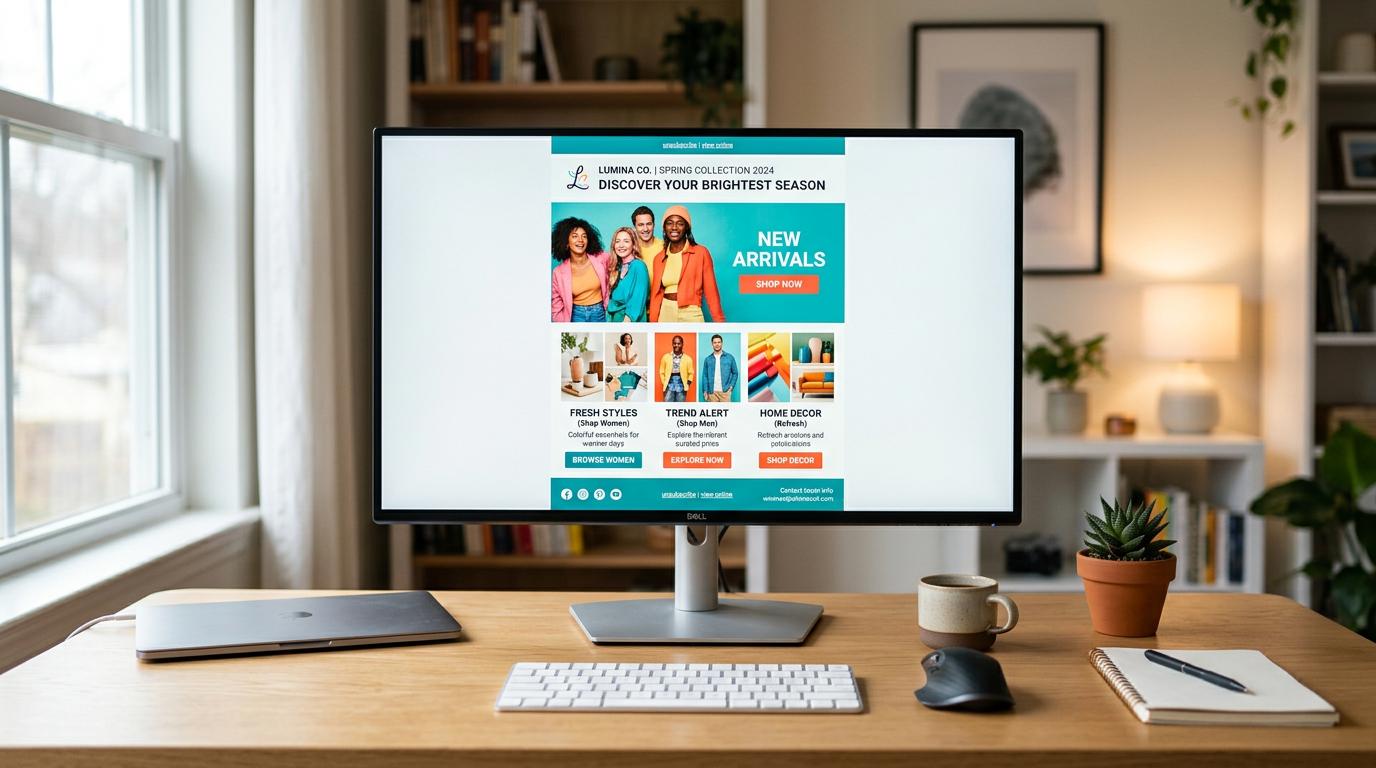
Your email design should enhance your message, not distract from it. Clean, professional designs build trust and guide readers toward your CTA.
Template Essentials
- Single column layout works best for mobile responsiveness
- Plenty of white space improves readability and focus
- Clear visual hierarchy guides readers through your content
- Contrasting CTA buttons stand out and encourage clicks
- Your logo and brand colors reinforce brand recognition
- Alt text for images ensures your message gets across even when images don’t load
Mobile Optimization
Over 60% of emails are opened on mobile devices. Mobile optimization isn’t optional — it’s essential.
- Use a responsive email template that adapts to any screen size
- Make CTA buttons at least 44x44 pixels for easy tapping
- Use a minimum font size of 16px for body text
- Test your emails on multiple devices before sending
- Keep your email width between 500-600 pixels
Visual Content
Strategic use of images, GIFs, and videos can enhance your emails:
- Product images help showcase what you’re offering
- Infographics make complex information digestible
- GIFs can demonstrate product features or add personality
- Video thumbnails with play buttons increase click-through rates
However, don’t rely solely on images — many email clients block images by default. Always ensure your message works without them.
Automation and Drip Campaigns
Email automation allows you to send the right message to the right person at the right time — without manually hitting send every time. This scalability is what makes email marketing so powerful.
Welcome Sequences
Your welcome sequence is the most important automated series you’ll create. New subscribers are most engaged immediately after signing up, so capitalize on this window.
An effective welcome sequence typically includes:
- Email 1 (immediately): Deliver the lead magnet and set expectations
- Email 2 (Day 2): Share your best content and establish credibility
- Email 3 (Day 4): Tell your brand story and build connection
- Email 4 (Day 6): Address common objections or pain points
- Email 5 (Day 8): Make a relevant offer or recommendation
Each email should provide standalone value while building toward your ultimate conversion goal.
Nurture Campaigns
Nurture campaigns keep your audience engaged over time, building trust and authority until they’re ready to purchase.
Effective nurture sequences include:
- Educational content that addresses common questions
- Case studies and success stories from customers
- Behind-the-scenes content that humanizes your brand
- Product tips and tutorials that demonstrate value
- Industry news and trends that position you as an expert
Behavioral Triggers
Behavioral triggers send emails based on specific actions subscribers take:
- Abandoned cart emails recover lost sales (average recovery rate: 10-15%)
- Browse abandonment emails re-engage shoppers who viewed products
- Re-engagement campaigns win back inactive subscribers
- Post-purchase sequences drive reviews, referrals, and repeat purchases
- Birthday and anniversary emails create personal connections
Analyzing and Optimizing Performance
Continuous improvement is the key to email marketing mastery. Regular analysis helps you understand what works and where to focus your optimization efforts.
Key Email Metrics
Open rate measures the percentage of recipients who opened your email. Industry averages range from 15-25%, but this varies significantly by sector. Focus on improving your subject lines and sender name recognition to boost opens.
Click-through rate (CTR) measures the percentage of recipients who clicked a link in your email. Average CTRs range from 2-5%. Improve this by refining your content relevance, CTA placement, and offer strength.
Conversion rate measures the percentage of recipients who completed your desired action (purchase, sign-up, etc.). This is your ultimate success metric.
Unsubscribe rate should stay below 0.5%. Higher rates indicate content relevance issues or frequency problems.
Bounce rate tracks undelivered emails. Hard bounces (invalid addresses) should be removed immediately, while soft bounces (temporary issues) warrant monitoring.
A/B Testing Framework
Systematic testing is how you achieve continuous improvement:
- Test one element at a time (subject line, send time, CTA, etc.)
- Use a statistically significant sample size (at least 1,000 subscribers per variant)
- Document your results to build institutional knowledge
- Implement winning variations and test new hypotheses
Common elements to test include subject lines, sender names, email content, CTA buttons, send times, and email frequency.
List Hygiene
A clean email list improves deliverability and engagement rates:
- Remove hard bounces immediately after each send
- Implement sunsetting policies for long-term inactive subscribers
- Use double opt-in to ensure list quality from the start
- Regularly re-engage inactive subscribers before removing them
- Monitor and maintain your sender reputation
The One-Week Starting Plan
You don’t need all of this at once. Here’s the order that gets results fastest:
- Day 1–2: Create one lead magnet that solves a specific problem for your ideal customer, and put an opt-in form on your highest-traffic pages.
- Day 3–4: Write a five-email welcome sequence using the structure above. This single automation will do more for your revenue than a year of sporadic newsletters.
- Day 5: Tag every new subscriber by the lead magnet they chose. That’s segmentation enough for now.
- Day 6–7: Send your first real email to the list you have — even if it’s twelve people. Small lists forgive imperfect emails; use that.
Someone joined your list because they thought you had something worth reading. Every email either confirms or refutes that belief. Keep confirming it, and email will quietly become your most profitable channel.
Ready to take your digital marketing to the next level? Explore our training programs and branding services designed to help entrepreneurs build successful online brands.